
Mini-MBA: Corporate Travel in Australia
A commercially rigorous, practitioner-focused executive programme explaining how corporate travel actually operates — economically, operationally and strategically — within the Australian and Asia-Pacific context. This programme is not theoretical business education. It is an applied commercial operating manual for the corporate travel ecosystem.
What you'll gain
- Explain the corporate travel value chain in plain English.
- Distinguish managed from unmanaged travel.
- Understand money flows and TMC revenue structures.
- Recognise Australian structural realities.
- Explain why distribution strategy affects control, service and data.
- Place a programme on a maturity ladder.
What you'll gain
- Explain the corporate travel value chain in plain English.
- Distinguish managed from unmanaged travel.
- Understand money flows and TMC revenue structures.
- Recognise Australian structural realities.
- Explain why distribution strategy affects control, service and data.
- Place a programme on a maturity ladder.
Course curriculum
Click any module to preview the learning outcomes and content depth.
01 How the Corporate Travel Industry Operates
Foundation 39 min audio
System Economics and Structural Overview
How the Corporate Travel Industry Operates
Foundation 39 min audioSystem Economics and Structural Overview
Learning outcomes
- Explain the corporate travel value chain in plain English.
- Distinguish managed from unmanaged travel.
- Understand money flows and TMC revenue structures.
- Recognise Australian structural realities.
- Explain why distribution strategy affects control, service and data.
- Place a programme on a maturity ladder.
Content depth
02 Roles and Incentives of Key Participants
Foundation 45 min audio
Understanding Commercial Motivations and Tension
Roles and Incentives of Key Participants
Foundation 45 min audioUnderstanding Commercial Motivations and Tension
Learning outcomes
- Explain what each stakeholder is trying to achieve.
- Identify where incentives are misaligned.
- Predict common friction between buyers, suppliers, TMCs and technology providers.
- Recognise Australian leverage constraints.
Content depth
03 How TMCs Actually Operate
Foundation 44 min audio
Operational Mechanics and Value Creation
How TMCs Actually Operate
Foundation 44 min audioOperational Mechanics and Value Creation
Learning outcomes
- Describe the TMC operating model in plain English.
- Explain why changes and disruption drive cost.
- Assess a TMC using operational pillars without using a scorecard.
- Spot margin compression risks in a pricing proposal.
Content depth
04 Corporate Travel Procurement Strategy
Foundation 44 min audio
Airline RFP Mechanics and Contract Structures
Corporate Travel Procurement Strategy
Foundation 44 min audioAirline RFP Mechanics and Contract Structures
Learning outcomes
- Explain the core procurement terms used in corporate travel sourcing.
- Assess whether a travel programme is ready for more advanced procurement commitments.
- Identify what belongs in an airline RFP pack.
- Compare share-of-wallet options without over-promising supplier commitments.
- Spot risky or incomplete contract clauses.
- Apply simple hotel and ground transport sourcing logic.
Content depth
05 Airline Corporate Sales & Revenue Management
Foundation 41 min audio
Yield Management, Discount Logic and Loyalty Economics
Airline Corporate Sales & Revenue Management
Foundation 41 min audioYield Management, Discount Logic and Loyalty Economics
Learning outcomes
- Understand the components and value of airline corporate deals
- Identify risks and benefits in airline proposals
- Evaluate the impact of discounts, rebates, and share targets
- Assess the importance of distribution channels and servicing parity
- Analyze data, reporting, and governance in airline contracts
Content depth
06 Technology & Distribution Transformation
Foundation 45 min audio
GDS, NDC, Direct Connect and AI Servicing Models
Technology & Distribution Transformation
Foundation 45 min audioGDS, NDC, Direct Connect and AI Servicing Models
Learning outcomes
- Explain why NDC readiness is more than access to airline content.
- Distinguish content, servicing, data and economics risks in NDC adoption.
- Identify where friction sits across airline, GDS, aggregator, OBT, TMC and corporate programme layers.
- Choose sensible adoption pathways: adopt, pilot, restrict, or avoid.
Content depth
07 Risk, Duty of Care & Governance
Foundation 41 min audio
Legal Obligations, Crisis Response and Traveller Tracking
Risk, Duty of Care & Governance
Foundation 41 min audioLegal Obligations, Crisis Response and Traveller Tracking
Learning outcomes
- Translate duty of care into practical travel controls in the Australian WHS context.
- Use escalation levels to decide when travel disruption becomes an incident or crisis.
- Apply a crisis playbook to international unrest and advisory changes.
- Explain disruption cost, ERM alignment, insurance, assistance and compliance in executive language.
Content depth
08 Sustainability & Carbon Accountability
Foundation 46 min audio
Scope 3 Emissions, SAF Economics and ESG Reporting
Sustainability & Carbon Accountability
Foundation 46 min audioScope 3 Emissions, SAF Economics and ESG Reporting
Learning outcomes
- Explain why business travel usually sits in Scope 3 and why that matters for governance.
- Recognise the difference between estimate, measure, manage, reduce and optimise maturity.
- Describe SAF economics, offsets, in-sector reduction and credible claims language.
- Apply cost, carbon and traveller/productivity trade-offs to supplier and policy decisions.
Content depth
09 Data, Analytics & Performance Measurement
Foundation 39 min audio
Spend Analytics, Savings Validation and Supplier Scorecards
Data, Analytics & Performance Measurement
Foundation 39 min audioSpend Analytics, Savings Validation and Supplier Scorecards
Learning outcomes
- Design supplier scorecards with a limited number of high-signal metrics.
- Balance commercial, operational and traveller experience measures.
- Use trends, weighting and governance consequences rather than isolated snapshots.
- Translate travel analytics into actions, decisions and supplier accountability.
Content depth
10 The Future of Corporate Travel (2026–2035)
Foundation 54 min audio
AI Evolution, Platform Consolidation and Structural Foresight
The Future of Corporate Travel (2026–2035)
Foundation 54 min audioAI Evolution, Platform Consolidation and Structural Foresight
Learning outcomes
- Apply the Structural Shift Horizon framework to 2026-2035 decisions.
- Explain the evolution of AI servicing from assist to automate, orchestrate and optimise.
- Assess airline distribution restructuring, sustainability constraints and volatility scenarios.
- Synthesize the full Mini-MBA into practical 90-day actions.
Content depth
Your faculty
World-class practitioners who have shaped corporate travel at the highest levels.
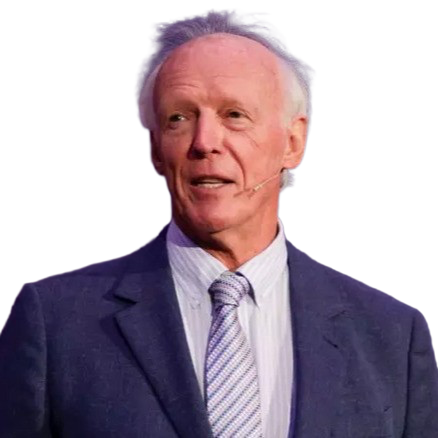
Peter Harbison
Co-Founder & Lead Faculty, Academy for Travel
One of the most influential figures in global aviation strategy, Peter founded CAPA – Centre for Aviation, the world's leading provider of independent aviation market intelligence. A former IATA Commissioner and Chairman of Greener Airlines, he has shaped policy and commercial thinking across the industry for over three decades. As co-organiser of FACTS (Forum for Australian Corporate Travel Sellers), Peter brings unmatched insight into the dynamics between airlines, corporates, and intermediaries.
Derek Sadubin
Co-Founder & Director of Programmes, Academy for Travel
A highly respected strategist with over 25 years at the forefront of aviation commercial development and corporate travel advisory. Derek has held senior roles advising airlines, airports, and travel buyers on market positioning, route economics, and procurement strategy across Asia-Pacific. As co-organiser of FACTS, he plays a central role in connecting industry stakeholders and driving best practice.
This course is for…
A commercially rigorous, practitioner-focused executive programme explaining how corporate travel actually operates — economically, operationally and strategically — within the…
$1,599 AUD
Annual access · cancel any time
What's included
- 12 months access from enrolment
- Verified digital certificate
- Sofia AI learning assistant
- Audio lectures for on-the-go learning
- Group licences available
- Practitioner workbook for every module
- 29 real-world case studies
Secure checkout · Questions? Contact us